
A simple question from a Geordie I met in Newcastle
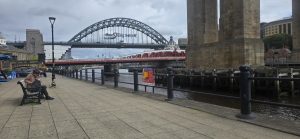
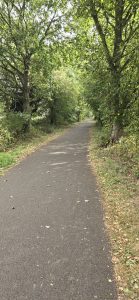
An on and off again mizzle caught up to me as I entered Newcastle. A little too persistent to ignore forcing me to slide on my rain gear again as I neared Wallsend, the termination of my Hadrian’s Wall walk. I had left Lyton earlier in the day, approximately 25 km outside of Newcastle and walked along the River Tyne following the rail bed of the first railway in the world, which had brought coal into the growing industrial city of Newcastle.

Even though my walk along Hadrian’s wall was a solo one, throughout the day I would be blessed with the most spontaneous discussions, sometimes from fellow walkers, other times with residents. Today a person about my age stopped me and asked if I was local and of course once I spoke, he knew I was not. So far, the conversation was veering along the typical path; where I was from, what I was doing and where I had come from that day. But then that was when the conversation took a turn suddenly to a much deeper place. His question made me pause, “what do you think about when you walk?”
This question was something that I had contemplated before and it reminded of an excerpt from a journal entry from my Offa’s Dyke walk in Wales the year previous, that partially captures what I think about when I walk:
July 25, 2024
The simple act of putting one foot down after another serves to “slow” the world down. Part of this is the reality of walking, but when the day consists of a 6 hour walk there is little advantage to pushing to meet a goal. And that I, is in fact, what we do most days in our lives.
And this is the first spiritual insight of long-distance walking. The need to pursue a goal dominates our lives. What is it like to remove that goal?
What first emerges is the physical sensations that I usually mute by making paramount my desires to meet a goal. Generally, I (and perhaps everyone) have an ability to dull/ignore/pack away these sensations to keep to the task at hand. When the goal is front and centre, the process becomes background. Without the goal, the sensations become embodied.
The first sensations are not the equivalent of the “runners high” but rather pain and discomfort. “Are we there yet” is alive and well as an adult phenomenon. But here is the realization: our discomfort is totally related to the goal-our destination. Walking creates the scenario where a natural mindfulness emerges, and I could watch how the initial pain and discomfort ultimately was related to my obsession with meeting a goal than to any physical cause. Thoughts come and go such as the map must be wrong! I have walked far enough! Our destination must be over the next hill! All these layers of suffering were the result of the need to finish or to meet the goal of the destination. Rather than being content and trusting the process that the walk was a journey, instead all my suffering originated from my judgements of the process.
How many days of our lives have we lived with the “rinse and repeat” cycle of suffering before we break free?
Walking: putting one foot in front of another, watching those ephemeral thoughts come and go, ultimately takes you to where you need to be.
So, What do I think about when I walk?
Truthfully the answer the answer is both, “a lot” and “not much”. This simple answer may sound trite but watching the ephemeral thoughts come and go and gradually slip away into a quieter deeply meditative space is the reason why long-distance walking speaks to me.
Paradoxically it is from these deep spaces of presence that some of the most amazing random human encounters occur, where conversations become surprisingly vulnerable and two humans who are meeting for the first time create a deep spiritual connection with our shared humanity.
Little did I imagine that a question about what my interior thoughts were while walking would lead to a philosophical talk about mindfulness and living in the moment as we age.
We both walked away from the encounter feeling that shared humanity.