
Why mattering matters.
“We are desperate for knowledge of self, but even more we are aching for the stories that have made us. We dare to touch the histories of this world, knowing that in them we are brought into a collective.”
Cole Arthur Riley, This Here Flesh.
I began examining my family’s history as part of the grieving process of losing my mother. I had hoped that by learning more about my ancestors I could begin to see traits and characteristics passed down through the generations. This journey, I thought would connect who I had become with my past and would create meaning of not only my life but also my mother’s. What has surprised me is how little I knew about my family’s history. At times, the added information has seamlessly become part of my understanding of myself and my family. At other times, I have struggled to take this added information and imagine it as part of my family history. This post is an attempt to understand why.
The opening quote by Cole Arthur Riley mirrors my journey. I began a search for self knowledge as well as the stories that have made us but as the quote suggests there is a dare, a challenge to embrace the stories that made us. I have come to believe that this quest requires me to struggle to assume the space needed to inhabit and own those stories as my own.
I resonate with this struggle. Months ago, I knew extraordinarily little of the family stories that have shaped me and my ancestors. As I have learned more about our histories, I started to see something much bigger. The big events of history mattered to our story and our ancestors played a role in those stories. Our identities we tell ourselves connect to our histories. Each new revelation required me to incorporate that information into my identity. And as it turns out, to embrace a story that is that large is hard. To do so one needs to believe that one matters.
Mattering
As I learned more of our family’s story it became harder to ignore that their contributions were significant to the settlement of Ontario in the1800’s. At first it was easier to fit in the latest information into my identity as this knowledge was in fact what I was craving as a child. It felt liberating to learn of the accomplishments.

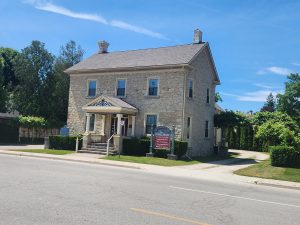
Yet, since I recently set my foot in Carlisle, UK something shifted. This was a different continent and centuries before, but it became apparent very quickly the intrinsic intertwining of the Bell family with the history of the borderlands of Scotland and ultimately Scotland itself.
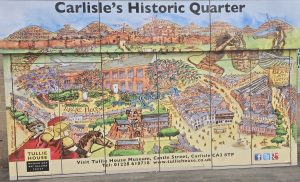
In an earlier post, Identity: Memory and Storytelling and how I got a kitten (Dec 12, 2024), I lamented that the few family stories we told were characterized by understatement. Upon reflection, I am imagining that this understatement was more of a function of how much has been lost from our stories, so that the small remnants that remain end up seeming insignificant. Without depth and context, these stories appear to be anecdotes not really mattering to our family and our collective identity. I now know that I have subconsciously embraced this “shrinking” of the story, unable to imagine something larger as to do so would be to assume too much space or an act of aggrandizement. The cultural lessons of humility and modesty generally considered as virtues, especially growing up and attending school in rural small-town Ontario, worked as collateral damage on my nascent development of confidence and mattering and a healthy sense of self. Because without knowing our personal and unique histories, who are we?
Yet other people, not in our family, have had fewer qualms to know our story and to share with me. Historians, genealogists, museum archivists both Canadian and from the United Kingdom continue to help me build the story with incredible depth and context. And each time this information has been generously shared, I was surprised and forced to enlarge the story a bit more. But it is not only through the sharing of our history from non-family members that this story grows.
Primary source material as a historian is the “Holy Grail” of our search to understand history. Finding and reading reports written in Middle English from the English Warden of the West March from the 1590’s to Queen Elizabeth I about exploits of the Bell family has forced me to see our family for the first time as creating history. The history of the Borderlands also inspired an oral tradition that has become an integral part of the history of Scotland. Author and poet Sir Walter Scott in the early 1800’s compiled the stories and ballads of the region from the 1400 and 1500’s. Of the forty-six ballads, two would feature Bells as central features of the story that now make up part of the historical imagination of Scotland. And paradoxically I have found myself resistant to embrace these ballads as an imagination of my and our family’s identity.
As a child, even with my fascination with history, I may not have been able to absorb a story of this magnitude. My fascination with explorers, pioneers, and cultures was endless but today I now know that I can add a bit more, the unique story of my family of explorers and pioneers on the frontiers of Scotland, Ireland, and Canada. Knowing these histories of the world allows me to see how they have shaped our collective family and my identity.
By believing that the histories matter and I matter, I can begin to finally clearly see the stories that are right in front of one’s eyes. And now it is time to write that story.
Your last line is filled with such intriguing possibility. Standing by . . .