
Identity: Memory and Storytelling and how I got a kitten
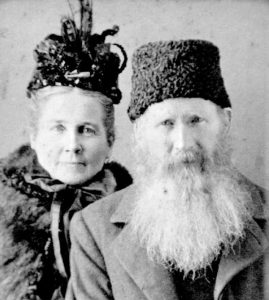
I do not know how old I was, but I remember wondering if anyone was important in my family, had we done something significant? My childhood answer to myself was a resounding no. It was not something we talked about when our family met for celebrations, and it was not something that was part of our immediate family culture. Perhaps it was particular to the time. The late 1950’s and early 1960’s was really the time of rapid economic growth; the baby boom was slowing winding down and the focus was on the future. World war two had ended only 12 years before my birth and for many people, especially the veterans, they seemed to want to get on with their lives building careers and having families.
Perhaps the lack of story telling was just another sign of modernity. In our growing cities and suburbs, the villages, towns, and farms were becoming a distant memory. Somehow storytelling was a bit “old fashioned.” More backward societies still had rituals and dances but with the homogenization of society in the post war era in the developed west, many of these traditions started to fall by the wayside or be relegated to certain times to become more of a token memory than an embodied part of their lived culture.
As I enter retirement age though, our societies orientation to the new has left me thinking of the past and what has been lost. It is easy to slip into a nostalgia about the past that never really existed. The reality of a lack of inclusion and inequality, the acceptance of violence, and the lack of concern for the environment are all reasons to not romanticize the past. But to exclude the past or to not integrate the past into our lives appears shortsighted. Our identities are forged by our history, as are our parents’ identities and their ancestors’ identities. Important world events such as wars, famines, waves of immigration and migration from rural areas to urban areas have all changed us and make us, our families and ourselves partially who we are. As a younger adult, in my hubris I was sure the past played no significant role in who I was.
In my childhood, our parents enriched our education with trips to pioneer museums, Indigenous sites, museums. As a child I was always fascinated with history and geography and so I sopped up all sorts of trivia and yet I wonder if when we were visiting Black Creek Pioneer Village, for example, if someone from our family could have said, that yes, your ancestors were pioneers and they lived lives that we as children were watching as re-enactments. And not only that, but they were also pioneers right here in York, Peel and Simcoe counties and their family names were the Pinkertons, the Bells and the Walkers. Writing this many decades later, this moves me like I was still a child. This is the power of story that I want to share as our story; a story that has partially made all of us who we are.
Dance, music, and storytelling allow us to create embodied memory that allow are ancestors to talk. The later in life realization that even though storytelling did not dominate our families’ culture, there was in fact a lot of going on. There is no one matriarch or patriarch that held the keys to the stories but each of us together actually hold pieces of the puzzle of a story that is important. Our family stories are the opposite of hyperbole; and could be described by the word: litotes, a word of which I have never heard. It comes from ancient Greece, and is an understatement, which is used as a type of rhetorical device, that was not used consciously by our family but was also probably a way to be humble and not aggrandize our stories. The goal of this blog is to try to pull these litotes together into a narrative that offers a way to make meaning of our journey through the centuries. And we will find that it is quite a story.